Day and night in Valencia
Valencia around the flamenco show
Plan a day around an evening at the tablao: the City of Arts and Sciences, the Turia Garden, the Silk Exchange and the Central Market.
See open evenings and book ↗Quick answer
Because dinner comes with the ticket, the day is free. La Bulería is in the Quatre Carreres district, which holds the City of Arts and Sciences, so that is the natural daytime pairing. The Turia Garden leads to it, and the Silk Exchange and the Central Market sit across from each other in the old town. Keep the day light, because the evening runs late.
A day that leads to the evening
A dinner-and-show ticket fills the evening, so plan the day around it. Spend the morning and afternoon on sights, keep the late afternoon free to rest, and arrive without rushing. The venue is on Carrer del Bisbe Jaume Pérez, which is the Valencian form of Calle Obispo Jaime Pérez, the spelling the venue itself uses. Valencian and Spanish both have legal status in the city, so you will see both on street signs, menus and maps.
The City of Arts and Sciences
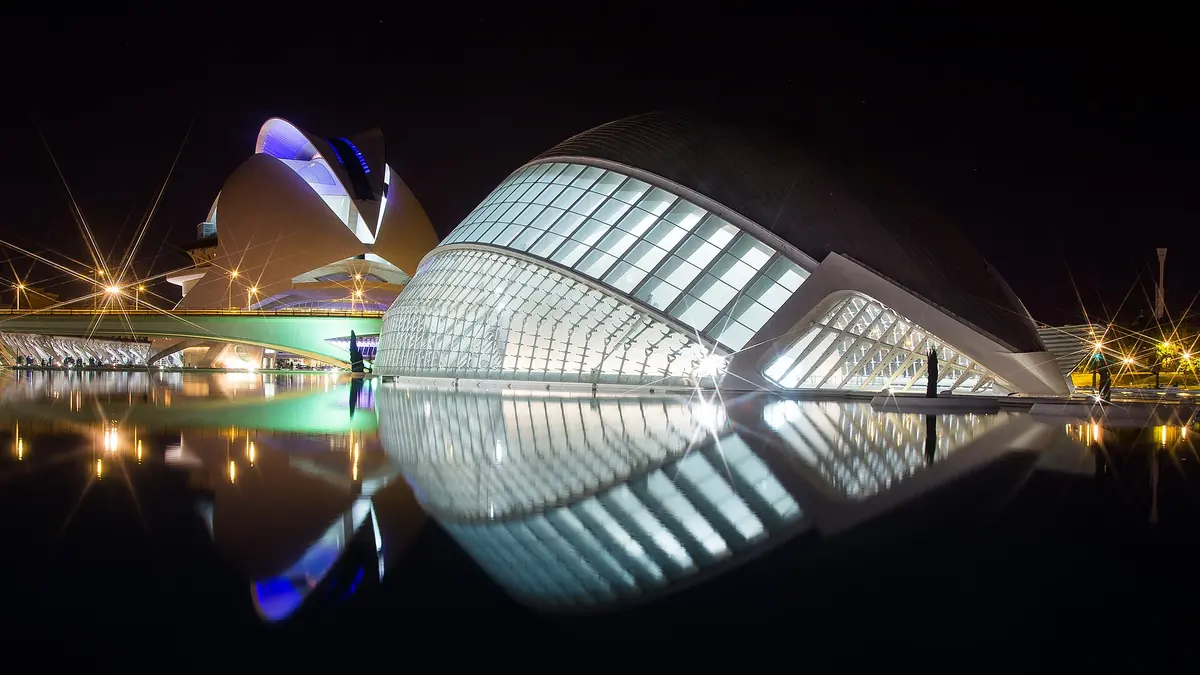
Visit Valencia describes the complex as a scientific, cultural and natural leisure site designed by the Valencian architect Santiago Calatrava. Its main buildings include the Oceanogràfic, the Hemisfèric and the Science Museum. The tourist board calls the Oceanogràfic the most visited building and suggests allowing at least four hours there, and about two hours for the Science Museum. It belongs to the Quatre Carreres district, the same district as the tablao. The tourist board adds that Hemisfèric projections run no longer than 45 minutes, so that building fits into a short window, and that it suggests about an hour and a half for the Hemisfèric and its surroundings.
The Turia Garden
The Turia Garden follows the old course of the river, which was diverted after the floods of 1957. Visit Valencia says it stretches for more than nine kilometres and that the City of Arts and Sciences marks its eastern end. It is a green corridor of lawns, paths and bridges that cuts through the city, so it works as a slow walk or a bike ride, and as a way to reach the Calatrava buildings without crossing traffic.
The Silk Exchange
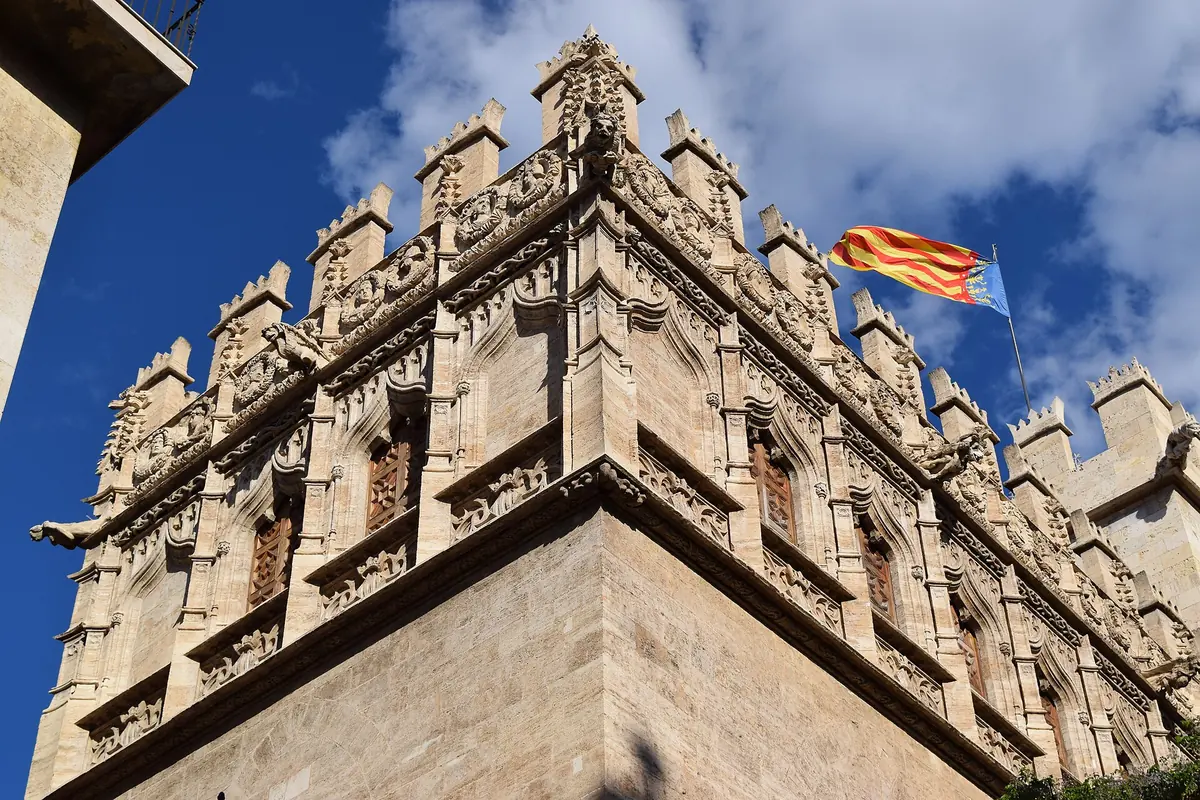
The Silk Exchange, or Lonja de la Seda, was declared a UNESCO World Heritage Site in 1996. Visit Valencia ranks it among the most beautiful secular Gothic buildings in Europe, a building where merchants made deals. Look for the columned hall, with its spiral stone columns, and the quiet Orange Tree Courtyard. It stands in the historic centre, a world away from the Calatrava buildings, and shows the other face of the city. Visit Valencia also points out the chapel's star-shaped ribbed vault and the spiral staircase in the tower.
The Central Market
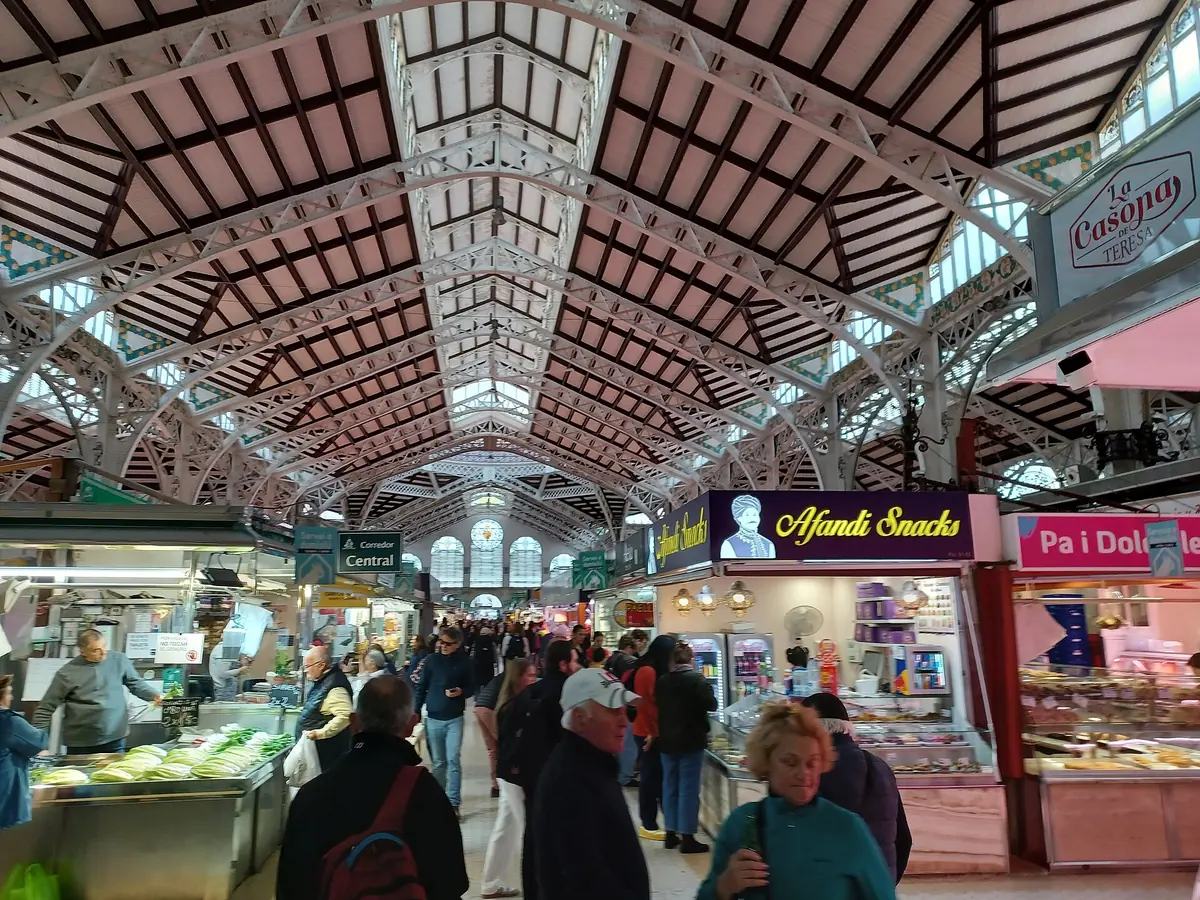
The Central Market is one of the main works of Valencian Art Nouveau, from the early 20th century, according to Wikipedia, and it stands across from the Silk Exchange and the Church of the Santos Juanes. A morning there pairs well with the exchange, which is only a few steps away. Because dinner at the tablao is part of the ticket, you can use the market for a light lunch or a browse and leave the evening meal to the venue. The market is a food hall as much as a sight, so go hungry for the browsing, not for a full lunch.
Pacing the day
A good plan is one big sight, one slow walk and a rest. Visit the old town in the morning, take the Turia Garden or the Calatrava buildings in the afternoon, and be at the venue at the time your confirmation shows. Do not stack three museums before a late dinner and a show. A tablao evening is long, and the performance is best taken in with energy left to listen. Keep the late afternoon free to rest, change and travel, and check your confirmation for the arrival time before you commit to anything that might run over.
Frequently asked questions
What is near La Bulería?
The City of Arts and Sciences is in the same Quatre Carreres district. The Turia Garden leads to it, and the old town, with the Silk Exchange and Central Market, is elsewhere in the city.
Is the Silk Exchange a UNESCO site?
Yes. Visit Valencia says it was declared a UNESCO World Heritage Site in 1996.
How long should I allow at the Oceanogràfic?
Visit Valencia suggests at least four hours, and longer if you add the dolphinarium show.
Which languages will I see on signs?
Valencian and Spanish, which both have legal status in the city. Carrer is the Valencian word for street, and Calle the Spanish.
Sources