The art form
What flamenco is: cante, baile, toque
Flamenco in plain words: song, dance and guitar, the palos and the compás, where it comes from and how it reached the tablao stage.
See open evenings and book ↗Quick answer
Flamenco comes from southern Spain and combines three arts: cante (singing), baile (dancing) and toque (guitar). UNESCO listed it as intangible heritage in 2010 and names Andalusia as its heartland, with roots in Murcia and Extremadura. The Gitano community had an essential role in its development. A tablao show puts all three arts, plus handclaps, into one small room.
Three arts in one
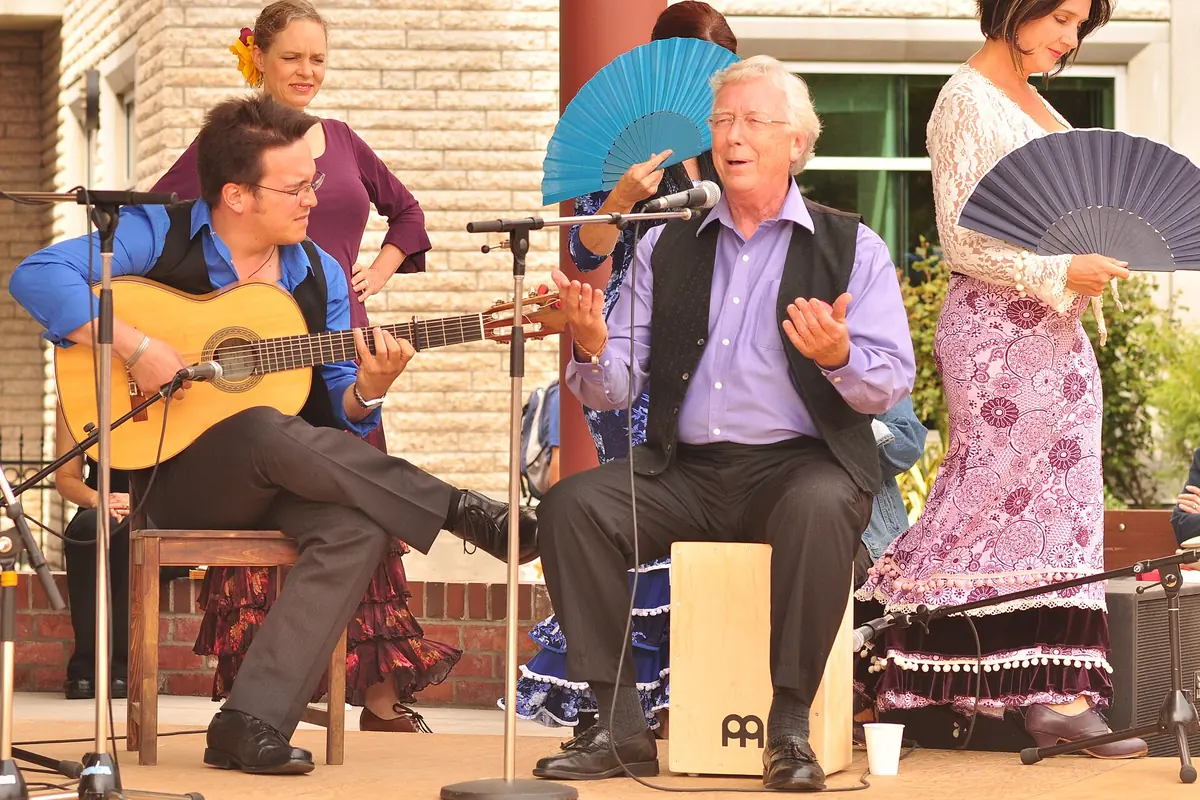
In UNESCO's words, flamenco joins singing, dancing and musicianship in a single art. Each has a Spanish name, and you will hear the words in any tablao. None of the three is only decoration for the others: the guitar has long outgrown its first job as accompaniment, and the singer and dancer can each lead a piece, with the others answering.
- Cante: the sung verse, by a cantaor or cantaora
- Baile: the dance, with footwork, arms and posture
- Toque: the guitar, which also keeps the rhythm
Palmas and jaleo
Between and beneath the three arts comes the sound of hands. Palmas are handclaps, and where no guitarist is playing they can carry the whole rhythm. Jaleo adds the voice: rhythmic clapping together with calls that encourage the performers, such as olé. Wikipedia notes the claps can be cupped for a hollow sound or struck with stiff fingers for a sharper one. Both are part of the art, not interruptions to it. When you hear the room clap in groups and a voice call out between the beats, you are hearing the compás being kept and the performers being urged on at the same time.
Compás: the rhythm underneath
In Spanish, compás means the repeating rhythmic cycle that a piece is built on, and it is fundamental to flamenco. The most common cycle runs to twelve beats, with accents that do not fall where a classical musician would expect a downbeat. Different forms place the accents differently, which is how experienced listeners tell them apart. You do not need to count to enjoy a show, but knowing there is a twelve-beat pulse explains why the clapping can sound like a conversation.
Palos: the forms
Each flamenco style is called a palo, and experts tell them apart by rhythm, mode, chords, the shape of the verse and where they come from. There are more than fifty. Traditionally they are sorted into three families: the gravest, called cante jondo; the lighter, more festive cante chico; and a middle group that fits neither. A programme usually moves between them, from grave to lively. The best known include the soleá, the seguiriya, the tangos and the bulería.
Read next: The bulería: flamenco's party rhythm
Where it came from
Andalusia is the flamenco heartland in UNESCO's account, with Murcia and Extremadura also part of its roots, and the Gitano community is credited with a central part in shaping it. Wikipedia reports a belief that it emerged in the late 18th century, in the towns and cities of the lower Guadalquivir plain, and Jerez de la Frontera holds the earliest written trace. The Gitano families who cultivated it, and the cultures around them, shaped a mixed tradition that no single origin explains.
From family gatherings to the tablao
Flamenco began as an intimate expression, sung at family gatherings and celebrations, and UNESCO notes that it passes on through families, dynasties and flamenco clubs. In the 19th century the first cafés cantantes offered it as a show, and in the 20th century it reached theatres and the wider world. A tablao keeps the small scale of the early days: a stage close to the tables, so you hear the heel and the breath.
Flamenco on the stage over time
Wikipedia traces the move from living room to stage in steps. The first cafés cantantes of the 19th century offered flamenco as a show, and the professional singer emerged in them. From the 1920s into the 1950s promoters billed flamenco as flamenco opera and put it on in bullrings and theatres, which spread it across Spain and abroad. The first chair of flamencology was founded in Jerez de la Frontera in the 1950s, and in 2010 UNESCO recognised the art as intangible heritage.
Frequently asked questions
Is flamenco only from Andalusia?
Andalusia is the heartland, in UNESCO's account, and Murcia and Extremadura are part of its roots. Today it is performed worldwide, including in Valencia.
What do cante, baile and toque mean?
Cante is song, baile is dance and toque is guitar playing. Together with handclaps they make up a flamenco show.
When did UNESCO recognise flamenco?
In 2010, when UNESCO placed it on its Representative List of intangible heritage.
Do I need to know Spanish to enjoy it?
No. Flamenco is sung in Spanish, but the music, dance and rhythm carry the feeling without the words.
Sources